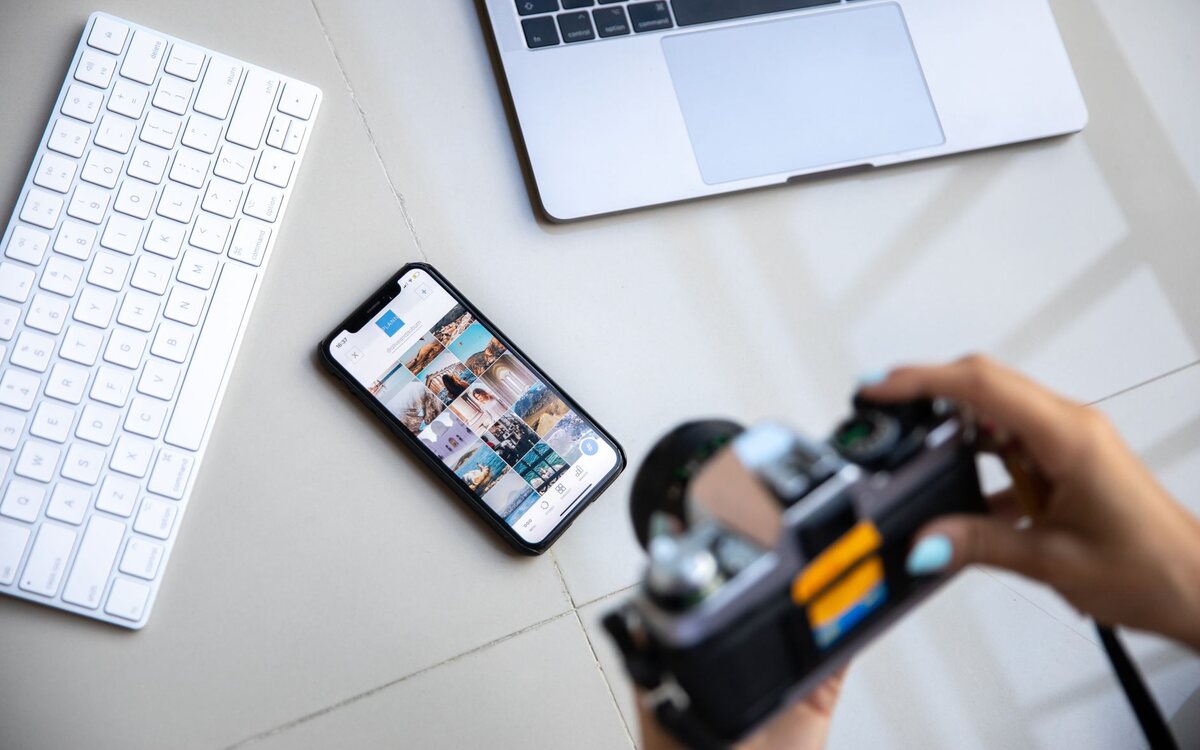
Instagram is where most affiliates start, and also where most of them get stuck. The reason is structural: the platform was built to keep people inside it, and a link takes people out.
The places where a link fits
- Bio: the only permanent one. A single link, so it has to lead somewhere that gathers the rest;
- Stories: with the link sticker. Gone in 24 hours, but it converts well because it reaches people who already follow you;
- Caption: not clickable, which is where “link in bio” comes from;
- Direct message: converts a great deal, and burns out fast if you send it to people who did not ask.
The links page: use one that is yours
The usual way around the bio limit is a link-aggregator service. It works, but it has a cost few people notice: all your traffic passes through an address that is not yours, and the reputation it builds stays with that platform.
A simple page on your own domain does the same job, and what it accumulates is yours. If you have no site, putting one up for this takes a weekend.
What the platform penalises
A post that only says “click” reaches fewer people than a post that delivers something. Tell the essential part there — what the product is, who it suits, what you made of it — and leave the link as a complement.
The limit of Instagram
All of this reaches people who already follow you, or whoever the algorithm decided to show. It does not reach the person researching that product right now, and that person is far closer to buying.
That is why affiliates who hold an income over the long run have some presence in search — through their own content and through links pointing at their pages.